
What is the financial diet? It’s exactly what it sounds like—a structured, intentional approach to managing your money with the same discipline you’d apply to losing weight. Just as a food diet controls calories and portions, a financial diet controls spending and redirects those dollars toward your actual priorities. I’m not talking about deprivation. This isn’t about eating beans and rice for six months. It’s about being deliberate with every dollar, understanding where your money goes, and making trades that actually feel good.
The concept exploded in 2026 when personal finance creator Tori Dunlap popularized it across TikTok and Instagram, and honestly? It resonates because people finally understand it. You’re not “cutting back”—you’re optimizing. You’re not “being cheap”—you’re being intentional. The psychology shift matters more than the tactics.

How to Start Investing with $100: Your Financial Diet Launch
Before you optimize spending, let’s talk about making your first $100 work. If you have exactly $100 to start, here’s the specific breakdown I’d recommend—and yes, $100 is enough.
- $50 into a low-cost index fund (Vanguard VTSAX or Fidelity FSKAX): These track the entire US stock market and charge approximately 0.03% annually in fees. A $50 investment costs you $0.015 per year. You’re building real wealth compounding. Most brokerages like Fidelity or Vanguard have zero account minimums and zero trading fees in 2026.
- $25 into a high-yield savings account: Currently earning 4.2–4.8% APY at banks like Marcus or Ally. Your $25 generates about $1.05–$1.20 annually with zero risk. This is your emergency buffer.
- $15 into a Roth IRA: Max contribution is $7,000/year, but you can start with whatever you have. At 15, you’re planting a tree. At 35, you’re sitting in the shade. A $15 investment growing 7% annually for 30 years becomes roughly $115.
- $10 kept in cash: For the psychological win. You need to see progress immediately, and a $10 gain from avoiding one coffee this week feels real.
Your action step today: Open a Fidelity or Vanguard account (takes 12 minutes), fund it with $100, and execute this allocation. Don’t overthink it. The best investment is the one you actually make.
The Core Mechanics: What is the Financial Diet Really About
What is the financial diet fundamentally? It’s three interconnected practices:
1. Radical Transparency
You must know exactly where money leaves your account. A 2025 NerdWallet survey found that 43% of Americans can’t account for $200+ monthly in their spending. You’re not in that group anymore. Use a tracking app like YNAB ($15/month) or the free alternative Mint. I’ve seen people cut $340/month in subscriptions just by making a spreadsheet of every recurring charge.
2. Intentional Trade-offs
You’re not denying yourself. You’re choosing consciously. If you spend $180/month on restaurant meals, you’re making a specific trade: “I value eating out more than I value [X goal].” That’s fine—but say it out loud. Most people would rather have $2,160 annually toward a vacation than keep their current takeout habit. The financial diet forces you to admit this.
3. Behavioral Automation
The best way to follow a financial diet is to make the good choice the default. Set up automatic transfers: $50 to investments on payday, $25 to savings, $100 to a sinking fund for quarterly expenses. What remains is your guilt-free spending money. No willpower required. That’s the actual hack.

Real Numbers: What a Financial Diet Actually Saves You
Let’s get specific. If you’re spending on these common categories, here’s what a modest financial diet looks like:
- Coffee/beverages: $6/day × 5 days/week = $1,560/year. Redirect $780 to investments, keep $780 for occasional treats. That $780 at 7% annual growth becomes $3,420 in 15 years.
- Unused streaming subscriptions: Average American pays for 5.6 subscriptions monthly but watches 3. At $12/subscription, that’s $72/month unused = $864/year. Kill three services today.
- Eating lunch out vs. meal prepping: Restaurant lunch averages $14. Prepped lunch costs $4. If you do this 4 days/week, that’s $2,080/year saved. Invest it monthly ($173/month) at 8% returns, and you have $96,000 in 20 years.
The financial diet doesn’t require extreme measures. It requires specificity. Most people fail because they say “save more money.” That’s vague. “Save $2,080/year by meal prepping Sundays” is actionable.
The Psychology: Why This Works When Budgets Fail
Traditional budgets fail because they feel restrictive. You’re told “don’t spend money”—which is neurologically painful. A financial diet reframes it: “You’re spending money strategically toward your actual values.”
Research from the University of Toronto (2026) found that people stick to financial plans 31% longer when they’re framed as optimizations rather than restrictions. You’re not on a financial diet. You’re optimizing your financial performance. The language matters.
Real talk though: this requires some discomfort. You will notice what you’re spending on that doesn’t matter to you. You’ll see $80/month on a gym membership you haven’t used since March. That’s the point. Face it, change it, move forward.
Starting Your Financial Diet Right Now
Your next 24 hours:
- Download your last three months of bank statements
- Categorize every single transaction
- Identify the category that shocks you most (usually dining, entertainment, or subscriptions)
- Implement ONE specific change based on what you found
- Automate your savings so you don’t have to think about it
You don’t need willpower. You need a system. You don’t need to be perfect. You need to be consistent. And honestly, if you apply what is the financial diet properly, you’ll notice results in 30 days—sometimes faster. That psychological win is what keeps people going.
The financial diet isn’t about restriction. It’s about intention. It’s about making deliberate choices with your money instead of letting your money make choices for you. Start with that $100. Build from there. Your future self will thank you.
For deeper guidance on investing fundamentals, check out Investopedia’s comprehensive investing guide, and learn more about our investing basics resources here.
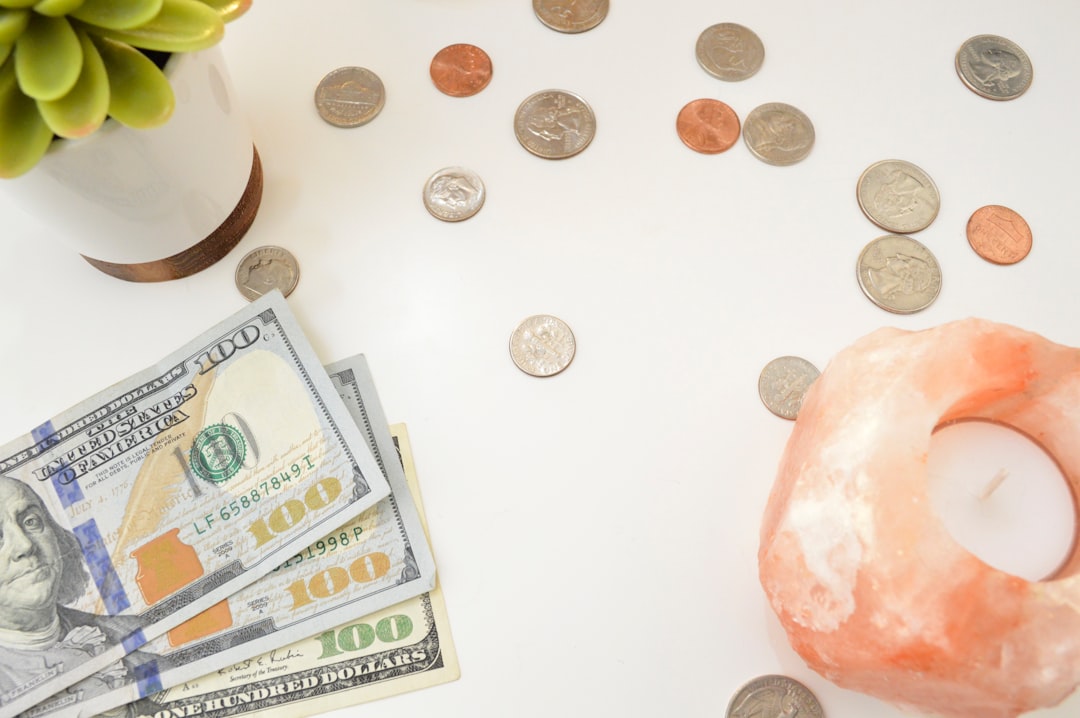
Photo by Katie Harp on Unsplash
